

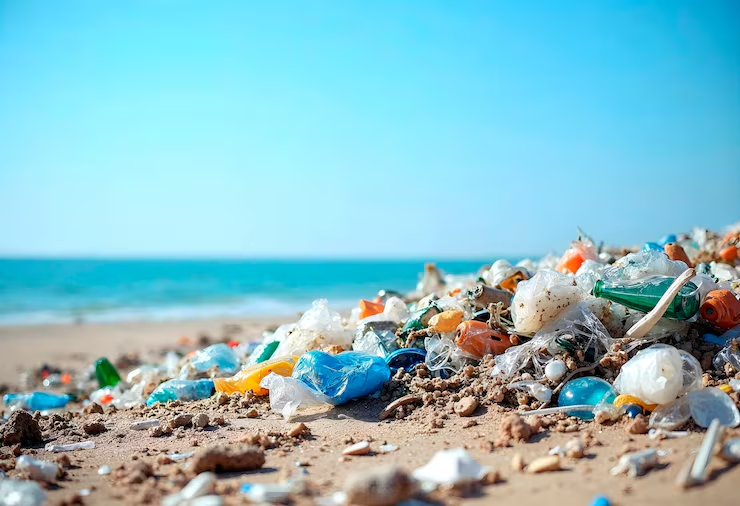
For decades, microplastics were perceived as a harmless byproduct of everyday plastic use. But today, thanks to numerous scientific studies, we know they represent one of the most serious and silent environmental threats of our time. Their tiny size less than five millimeters makes them nearly invisible to the naked eye, yet their presence is so massive and persistent that they have infiltrated every corner of the planet.
An Omnipresent Pollutant
Microplastics come primarily from three sources:
- The degradation of larger plastics, such as bags, bottles, and packaging
- Direct release, such as microbeads in cosmetic or industrial products
- Material wear, especially from synthetic textiles, tires, and paints
What is alarming is that they do not only contaminate oceans and beaches: they have been found in rivers, lakes, agricultural soil, mountains, polar ice, clouds, and even in atmospheric currents. Recent studies have detected microplastics in rain, desert sand, and even in Himalayan snow.
Their ability to travel long distances shows that the problem has surpassed regional boundaries. It is now a global phenomenon.
Impact on Marine Ecosystems
The oceans have become the final destination for much of this pollution. For marine life, microplastics are a deadly trap. Many animals from fish to turtles mistake them for food. This leads to:
- Digestive blockages that prevent proper feeding
- Reduced energy availability, affecting growth and reproductive capacity
- Accumulation of toxins, as microplastics absorb dangerous chemical substances
Commercial species such as tuna, mackerel, and sardines have already shown the presence of microplastics in their bodies. This means that the food chain including humans is exposed.
The Threat to Human Health
Although research is still ongoing, recent findings are worrying. Microplastics have been detected in human blood, lungs, placenta, and even in stool samples. Their presence in organs such as the liver and kidneys is also under investigation.
Potential health risks include:
- Chronic inflammation caused by particles the body cannot eliminate
- Oxidative stress and cellular damage, especially in vulnerable tissues
- Transport of toxic substances such as pesticides or heavy metals attached to plastics
- Endocrine disruption due to compounds like bisphenol A (BPA), present in many plastics
Although long term effects are not yet fully understood, scientists warn that continuous exposure could have significant consequences.
A Problem Linked to the Consumption Model
The rise of microplastics is closely tied to our consumption model based on disposable products and cheap materials. Over 300 million tons of plastic are produced every year, and a large portion eventually breaks down into microscopic particles that never fully disappear.
Synthetic clothing is one of the main invisible sources: each wash releases millions of microscopic fibers that slip through filtration systems and end up in rivers and oceans.
Tires also contribute constant wear releases microplastics that rainwater carries into drains and natural waterways.
What Solutions Exist?
Solving the problem requires action on multiple levels:
- Public Policy
- Banning microplastics in cosmetics (already done in some countries)
- Regulations to reduce single use plastics
- Requiring filters in industrial and household washing machines
- Improving wastewater treatment plants
- Industry
- Developing biodegradable alternatives
- Innovating in sustainable textiles
- Reducing plastic packaging
- Citizens
- Reducing disposable packaging
- Choosing higher quality clothing and natural materials
- Practicing responsible recycling
- Avoiding products with plastic microbeads
A Challenge That Will Shape the Future
Microplastics are a silent threat because they cannot be seen… but they are everywhere. Their impact affects not only marine life but also our health, economy, and food systems. Although the problem seems overwhelming, we still have time to slow its expansion.
The key lies in changing our relationship with plastic and adopting more responsible production and consumption models. The future of the oceans and our own future depends on it.




Deja una respuesta